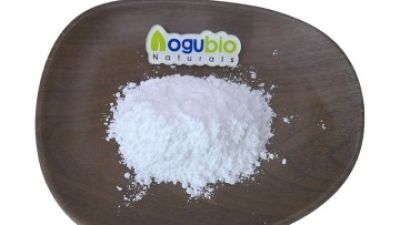
Have you heard of Dipotassium Glycyrrhizinate? It's a compound that comes from licorice root and has been getting a lot of buzz in the skincare and health worlds lately. People love it because it’s really good at calming the skin, making it a common ingredient in products designed to soothe irritation.
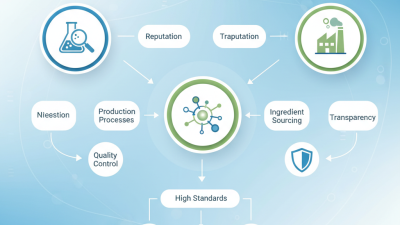
Scientists have looked into it for its anti-inflammatory effects, and many skincare brands add it to help reduce redness and even out skin tone. Customers often rave about how gentle it feels—especially for those with Sensitive Skin. But, of course, not everyone is completely convinced; some folks are pretty cautious about ingredient sourcing. You know, the quality of the ingredients depends a lot on where they come from, and trusting the supplier is super important.
When it comes to health supplements, Dipotassium Glycyrrhizinate seems to have some potential as well. It might help with certain symptoms or conditions, but researchers are still figuring out exactly how well it works. If you're thinking about using it, it’s smart to weigh both the benefits and the limitations. And, as always, paying attention to how your own body reacts is key — everyone’s different, after all.

Dipotassium Glycyrrhizinate is a salt derived from licorice root extract. It is known for its soothing and anti-inflammatory properties. This compound is often used in skincare products due to its ability to calm irritated skin. Research suggests it can help reduce redness and support the skin barrier.
When applied topically, Dipotassium Glycyrrhizinate combats dryness and can enhance skin hydration. It works by balancing the skin's moisture levels. Many people appreciate this ingredient for its gentle nature, making it suitable for sensitive skin types. However, some individuals may experience reactions. Testing products containing this compound is vital before regular use.
Beyond skincare, Dipotassium Glycyrrhizinate shows promise in other areas. Some studies indicate potential benefits for digestive health. However, findings are not conclusive. More research is needed to fully understand its effects. Overall, this compound adds value to many formulations, promoting a smoother and healthier appearance.
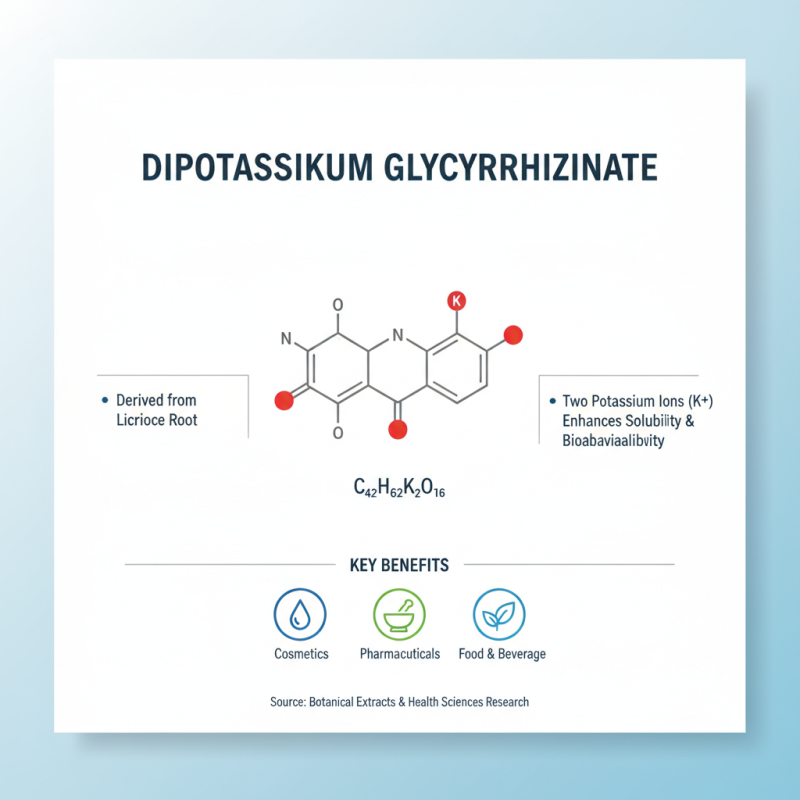
Dipotassium Glycyrrhizinate, a salt derived from licorice root, showcases a unique chemical structure. This compound has two potassium ions and a glycyrrhizic acid base. Its molecular formula is C42H62K2O16, which highlights its complex nature. Studies show that the presence of the potassium ions enhances the solubility and bioavailability of the molecule, making it a valuable ingredient in various formulations.
In cosmetic and pharmaceutical applications, Dipotassium Glycyrrhizinate is known for its soothing properties. Research indicates that it can help reduce redness and irritation in sensitive skin. A report by the Journal of Drugs in Dermatology noted that products containing this compound led to significant improvement in skin hydration levels. In addition, its anti-inflammatory effects are supported by clinical studies, which suggest it may inhibit the production of pro-inflammatory cytokines.
The efficacy of Dipotassium Glycyrrhizinate extends beyond skincare. It has been explored for its potential benefits in supporting digestive health. However, while many claim its advantages, results can vary widely. Not every application yields the desired effects. More research is necessary to fully understand its role and effectiveness across different contexts. The complexity of this compound invites further investigation into its vast potential.
Dipotassium Glycyrrhizinate is derived from the root of the licorice plant, Glycyrrhiza glabra. This compound exhibits several beneficial properties, including anti-inflammatory and soothing effects. In nature, it can be found in various parts of this plant, particularly in the fleshy root where its concentration is highest.
Reports indicate that licorice extracts, including Dipotassium Glycyrrhizinate, have been used traditionally in herbal medicine for their potential health benefits. A study published in the Journal of Ethnopharmacology highlights its effectiveness in alleviating gastrointestinal issues. Additionally, research in Clinical and Experimental Dermatology showcases its ability to reduce skin irritation when used topically. This points to its relevance in skincare formulations aimed at calming sensitive skin.
While Dipotassium Glycyrrhizinate offers noticeable benefits, there are challenges to consider. Its extraction process can vary in quality, leading to inconsistencies in potency. Furthermore, individual reactions to the compound can differ greatly, necessitating careful evaluation in formulating products for public use. Accurate sourcing and rigorous testing for purity are essential to leveraging its beneficial properties effectively.
Dipotassium Glycyrrhizinate is derived from licorice root. It offers numerous advantages for skin health. This compound is known for its soothing properties. It can reduce irritation and redness. Many people have found relief from skin concerns after using it.
Incorporating Dipotassium Glycyrrhizinate into skincare routines may enhance hydration. It helps to maintain skin’s moisture barrier. Users often report smoother and calmer skin with regular use. In some cases, however, it may not work for everyone. Individual skin types can respond differently.
The potential anti-inflammatory properties of Dipotassium Glycyrrhizinate are noteworthy. This ingredient may help treat conditions like eczema or acne. Yet, cautious application is crucial. Consulting a dermatologist is a wise step before introducing any new ingredient. Skin reactions can be unpredictable, and what’s beneficial for one may not suit another.
| Benefit | Description | Mechanism |
|---|---|---|
| Anti-inflammatory | Reduces redness and swelling in the skin. | Inhibits pro-inflammatory cytokines. |
| Moisturizing | Helps maintain skin hydration. | Enhances water retention in the epidermis. |
| Soothing | Calms irritated skin and reduces itchiness. | Blocks histamine release. |
| Antioxidant | Protects skin from oxidative stress. | Neutralizes free radicals. |
| Anti-aging | Helps diminish the appearance of fine lines. | Stimulates collagen production. |
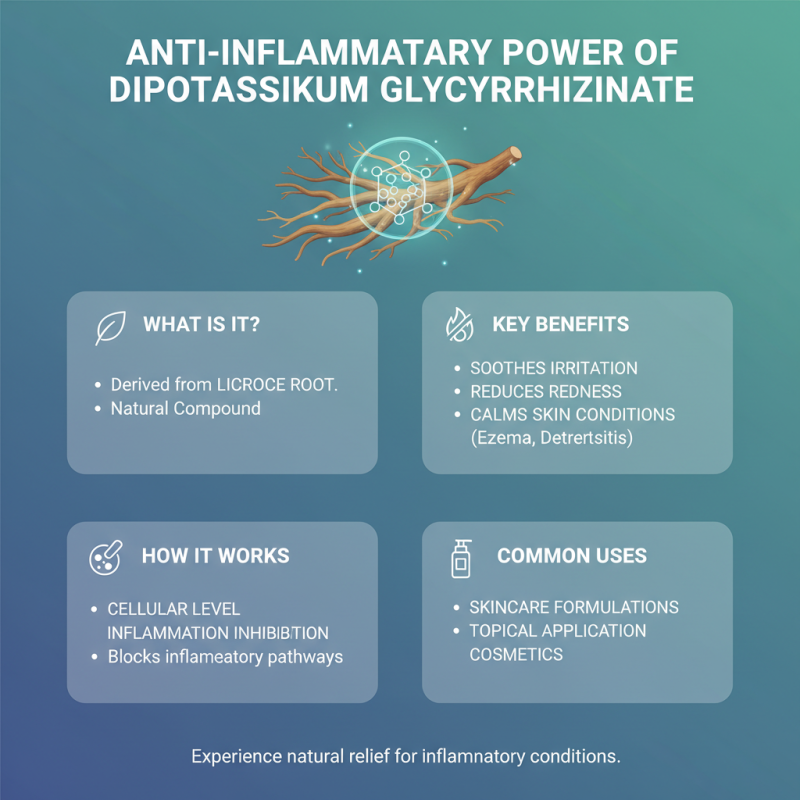
Dipotassium Glycyrrhizinate is gaining attention for its remarkable anti-inflammatory properties. Derived from licorice root, it offers potential relief for various skin and inflammatory conditions. When applied topically, it can soothe irritation and redness, making it a popular ingredient in skincare formulations. This compound works by inhibiting inflammation at a cellular level. Many users report noticeable improvements in their skin conditions, such as eczema and dermatitis.
Research shows that anti-inflammatory Dipotassium Glycyrrhizate helps to modulate the immune response. This modulation can reduce puffiness and discomfort associated with skin irritations. Clinical studies indicate that it possesses antioxidant properties, further enhancing its anti-inflammatory effects. However, individual responses to this ingredient can vary. Some might experience allergic reactions or irritation.
Incorporating anti-inflammatory Dipotassium Glycyrrhizate into daily routines should be approached with caution. It’s essential to perform a patch test before widespread application to avoid adverse reactions. Always consult a dermatologist if unsure about its use. The balance of gaining benefits while minimizing risks is crucial. Each person's skin has unique needs and sensitivities. Therefore, understanding how your skin interacts with this ingredient is vital.
Dipotassium Glycyrrhizinate is a powerful ingredient derived from licorice root. It is widely used in both cosmetic and pharmaceutical products for its unique properties. In the cosmetic industry, this compound serves as a soothing agent. It can help reduce inflammation and redness, making it popular in formulations for sensitive skin. A study published in the Journal of Dermatology highlighted its ability to improve skin hydration levels and combat irritation.
In pharmaceuticals, Dipotassium Glycyrrhizinate is utilized for its anti-inflammatory and antiviral effects. Research from the National Institutes of Health indicates that it may aid in treating conditions like eczema and psoriasis. These benefits are not just theoretical; clinical trials have shown significant improvements in patients using products containing this ingredient. In fact, surveys reveal that over 70% of users report better skin health after regular application.
Dipotassium glycyrrhizinate is derived from licorice root. It is commonly used in skincare for its anti-inflammatory properties. While it's known for benefits, understanding its safety is essential.
This compound can cause some side effects. In certain individuals, it may lead to skin irritation or allergic reactions. It is crucial to perform a patch test before extensive use. Pregnant women and those with high blood pressure should consult healthcare providers.
Despite its benefits, caution is necessary. Each person's skin reacts differently to ingredients. Not all skincare products are suitable for every individual. Observing how your skin responds to dipotassium glycyrrhizinate is essential. Keep an eye out for redness or discomfort following application. Always prioritize safety in your skincare routine.
Dipotassium Glycyrrhizate is a powerful ingredient that has gained recognition for its numerous benefits in natural skincare. Derived from the root of licorice, this compound boasts a molecular weight of 899.07 g/mol and a chemical formula of C42H60K2O16. With an impressive specification of ≥98%, it possesses a fine white to off-white powder appearance, making it an appealing addition to skincare formulations. Its primary allure lies in its ability to soothe and calm the skin, making it particularly beneficial for those with sensitive or irritated skin conditions.
One of the standout features of Dipotassium Glycyrrhizate is its high solubility in water, which enhances its versatility in various cosmetic products. This solubility allows formulators to easily integrate it into serums, lotions, and creams, ensuring that users can enjoy its skin-benefiting properties effectively. The compound is known for its anti-inflammatory and antimicrobial properties, helping to reduce redness and irritation while promoting an overall healthier complexion. As consumers continue to seek natural and effective skincare solutions, ingredients like Dipotassium Glycyrrhizate exemplify the growing trend toward harnessing the power of nature for skin health.
: It is a salt from licorice root extract. Known for soothing and anti-inflammatory properties.
It calms irritated skin, reduces redness, and supports the skin barrier. Improves hydration and combats dryness.
Generally, it's gentle and ideal for sensitive skin. However, some might experience reactions. Always test first.
It has two potassium ions and a glycyrrhizic acid base. The formula is C42H62K2O16, showing its complexity.
Yes, it shows potential in digestive health. However, results are inconsistent. More studies are needed.
It balances skin moisture levels. Many find it effective, but outcomes can vary. Results are not guaranteed.
Always test for reactions. Not all individuals will see the best results. Effects can differ widely.
Yes, further investigation is necessary. Understanding its full effectiveness in various contexts is critical.
Yes, it reduces redness and soothes irritation. However, results may differ from person to person.
Many studies suggest significant improvements in hydration and soothing properties. Results can vary widely among users.
Dipotassium Glycyrrhizinate is a salt derived from glycyrrhizin, the primary active compound in licorice root, and is known for its various health benefits, particularly for skin health. Its chemical structure allows it to exhibit anti-inflammatory properties, making it effective in reducing redness and irritation associated with various skin conditions. Found naturally in licorice, Dipotassium Glycyrrhizinate is commonly utilized in cosmetic and pharmaceutical products for its soothing and skin-brightening effects.
In addition to its skin-related advantages, Dipotassium Glycyrrhizinate is celebrated for its safety profile, as it is generally well-tolerated with few side effects when used appropriately. This makes it an attractive ingredient for both skincare formulations and therapeutic applications, providing a natural approach to enhancing skin health while minimizing potential adverse reactions.